How to Realize Seamless Material Conveying in Mine Sites with Heavy-duty Hopper Feeding Systems
Time:2026-04-29 17:28:52Number of Clicks:
Material conveying in mine scenarios is typically characterized by complex working conditions, extreme material properties, long processes and multiple links. Traditional feeding modes can no longer adapt to the high-quality development needs of the global mining industry, and "seamless material conveying" does not only refer to the physical connection of equipment interfaces, but the full-process, multi-dimensional continuous, stable and coordinated conveying.
Material Conveying Requirements in Mine Sites
Extreme Material Properties
Mine materials generally have the characteristics of large block size (up to 1500mm), high hardness and high abrasiveness. Meanwhile, their moisture content fluctuates greatly due to climate change, which is prone to bonding and bridging problems. Traditional feeding equipment has insufficient impact resistance, and is very likely to have material jamming, blocking and breaking issues. A single fault shutdown can cause production interruption of the entire conveying line, which is one of the core causes of unplanned downtime in mines.
Capacity Matching for Multi-link Connection
Mine production involves multiple process links from truck unloading, primary crushing, screening and transfer to stacking/ship loading. There are natural differences in the rated capacity and operation rhythm of upstream and downstream equipment. Traditional quantitative feeding equipment cannot realize dynamic speed regulation, which is very likely to cause "conveying faults" such as front-end overflow and back-end material waiting. As a result, the comprehensive operation efficiency of the entire production line can only reach 70%-80% of the designed capacity, causing serious capacity waste.
Equipment Stability Requirements Under Complex Working Conditions
Global mine sites cover a variety of working conditions, including high dust in open-pit mines, high humidity in underground mines, low air pressure at high altitudes, and extreme high and low temperatures. Traditional feeding equipment has insufficient sealing performance and weather resistance, with fast wear of parts and high failure rate, requiring frequent shutdown for maintenance and replacement. It cannot meet the 7×24 continuous production demand of mines, which greatly increases operation and maintenance costs and labor input.
Global Environmental Protection and Safety Compliance Requirements
At present, countries around the world have formulated strict standards for dust emission, noise control and safe production in the mining industry. ISO international standards and local regulations of various countries have continuously upgraded the environmental protection requirements for bulk material conveying in mines. The traditional open feeding method causes serious dust escape, and material scattering brings potential safety hazards on site, which can no longer meet the compliant development needs of the global mining industry and has become an important restriction for the global layout of mining enterprises.
Core Evaluation Indicators of "Seamless Material Conveying" in Mine Sites
Continuous Uninterrupted Conveying: The feeding system can realize dynamic capacity matching with upstream and downstream equipment, without material breaking, overflow or blocking, ensuring 7×24 continuous and stable operation of the entire conveying line, with unplanned downtime approaching zero.
Full-process Low-loss Transfer: During the feeding and transfer process of materials, the crushing rate and scattering rate are controlled at an extremely low level. At the same time, it reduces the impact wear of materials on core components such as conveyor belts and pulleys, and lowers material loss and full life cycle operation and maintenance costs of the equipment.
Adaptive Operation Under Multiple Working Conditions: It can adapt to the dynamic changes of different material properties, capacity requirements and environmental working conditions, without frequent manual parameter adjustment, and always maintain stable feeding performance, adapting to the diverse working conditions of mines in different regions around the world.
Full-link Compliant Controllable: The whole process from feeding to conveying realizes closed management and control. Dust and noise emissions comply with ISO international standards and local environmental protection regulations of the project. It has a complete safety protection mechanism to realize preventable and controllable safety risks in the whole process.
Core Composition of Heavy-duty Hopper Feeding System and Adaptation to Mine Scenarios
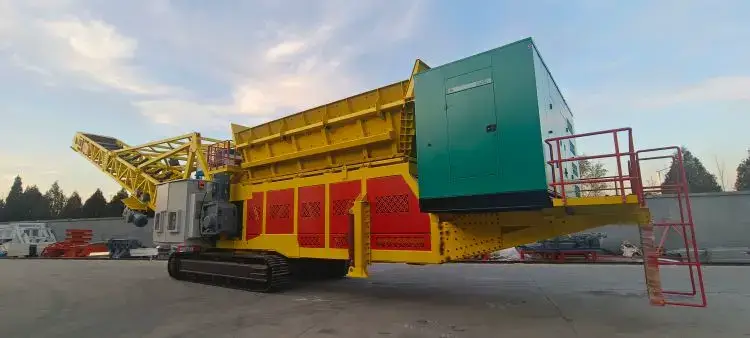
The ZOOMRY heavy-duty hopper feeding system is an integrated feeding solution customized and developed for mine scenarios. It adopts a modular design concept, which can be flexibly adapted to various mine conveying scenarios, and is the core carrier to realize seamless material conveying.
Core Modular Composition of Heavy-duty Hopper Feeding System
Heavy-duty Receiving Bin Module
As the front-end buffer unit of the system, it is made of high-strength wear-resistant steel plate. The bin structure angle and anti-bridging design are optimized for the impact of large bulk materials in mines, which can effectively avoid material bonding and blocking problems. The bin volume can be customized according to the front-end unloading equipment and material properties, with sufficient buffer space reserved to realize steady flow and pre-homogenization of materials, laying a foundation for subsequent continuous feeding.
Variable Frequency Drive Feeder Main Body Module
The core execution unit of the system adopts a heavy-duty frame structure and high wear-resistant bearing design, which can withstand the continuous impact of large bulk materials. Equipped with a high-precision variable frequency drive (VFD) system, it can realize stepless speed regulation from 0 to the rated feeding capacity, with a maximum processing capacity covering mine capacity demand of more than 550TPH. It can dynamically adjust the feeding amount according to the real-time load of the downstream conveying equipment, fundamentally solving the problem of capacity mismatch. At the same time, the equipment operation speed can form a scientific speed gradient with the belt conveyor, reducing material accumulation and impact at the connection.
Material Guiding and Anti-overflow Chute Module
The core unit connecting the feeder and downstream conveying equipment adopts a streamlined chute design, optimizes the falling angle and trajectory of materials, reduces the vertical impact of materials on the conveyor belt, and effectively reduces the wear and deviation risk of the conveyor belt. It is equipped with a fully enclosed material guiding trough and multi-stage sealing structure, which can effectively prevent material scattering and dust escape. At the same time, it is matched with a high-performance cleaning scraper, which can clean the residual materials on the surface of the conveyor belt in real time, avoid equipment wear and material waste caused by return belt material carrying, and is suitable for the supporting use of ZOOMRY full series of belt conveyors.
Intelligent Monitoring and Control Module
The "intelligent center" of the system integrates a variety of sensors for material level monitoring, speed monitoring, load monitoring, material blocking early warning, overload protection, etc., which can collect real-time operation data of the whole process of the system. It supports linkage with the central control system of the entire mine conveying production line, and has the functions of remote monitoring, fault early warning, automatic speed regulation, emergency shutdown, etc., which can realize unattended and intelligent operation, and provide core support for the intelligent transformation of mines.
Supporting and Protective Parts Unit
It includes core parts such as heavy-duty idler sets, drive pulleys, bend pulleys, shock absorption supports, and replaceable wear-resistant liners. All parts are designed and manufactured in strict accordance with ISO international standards, adopting materials and processes suitable for high abrasion and high load working conditions in mines. It realizes universal adaptation with ZOOMRY full series of bulk material conveying equipment, which can effectively reduce the difficulty of equipment operation and maintenance and the cost of parts replacement, and ensure the long-term stable operation of the system.
Core Technical Advantages Adapted to Mine Sites
Superior Impact Resistance and Anti-blocking Design, Adapting to Extreme Material Working Conditions: The system adopts a heavy-duty frame structure and thickened wear-resistant material, which can withstand the high-intensity impact of direct unloading by large-tonnage trucks. For extreme materials such as high-hardness and large-block ores, high-viscosity wet materials, the anti-bridging structure of the bin and large-channel feeding design fundamentally eliminate material blocking and jamming problems, ensuring the stability of continuous feeding.
Variable Frequency Stepless Speed Regulation, Realizing Accurate Dynamic Capacity Matching: The variable frequency drive technology of the system can realize real-time dynamic adjustment of the feeding amount. It can automatically adjust the feeding speed according to the operating load of downstream belt conveyors, crushers and screening equipment, completely solving the conveying fault caused by capacity mismatch of upstream and downstream equipment, realizing seamless connection of each process link, and increasing the comprehensive operation efficiency of the entire conveying line by 20%-30%.
Fully Enclosed Modular Design, Taking Into Account Environmental Compliance and Rapid Deployment: The system adopts a fully enclosed structure design, which is completely sealed from the bin to the chute and material guiding trough, which can control the dust escape within the mainstream global environmental protection standards and meet the environmental protection compliance requirements of mines in various countries. At the same time, the modular structure design can be flexibly adapted to various installation forms such as fixed, mobile and semi-mobile. Whether it is a new mine production line or the upgrading and transformation of the existing conveying system, it can realize rapid splicing installation and seamless docking, greatly shortening the project construction cycle.
Full-link Intelligent Management and Control, Reducing the Risk of Unplanned Downtime: The intelligent control module of the system can realize real-time collection and analysis of the whole process operation data, early warn potential faults such as material blocking, overload and belt deviation through algorithms, and automatically trigger the protection mechanism. At the same time, it can realize coordinated linkage with core mine conveying equipment such as telescopic stackers, mobile ship loaders and truck dumpers, build a full-process intelligent conveying system, and greatly reduce the duration of unplanned downtime.
High Versatility and Global Adaptation, Covering Full-scenario Requirements: The system can be flexibly adapted to various mine scenarios such as open-pit mines, underground mines and transfer yards, and can be perfectly adapted to ZOOMRY full series of bulk material conveying equipment. At the same time, the standardized parts design complies with ISO international standards, which can realize global universal use, reduce the difficulty of operation and maintenance and parts supply of overseas projects, and adapt to the global layout needs of mining enterprises.
Solutions for Realizing Seamless Material Conveying with Heavy-duty Hopper Feeding System in Mine Sites
Realizing seamless material conveying in mines is not only the procurement and installation of a single equipment, but a full-process systematic project from preliminary selection, mid-term installation and commissioning to later operation, maintenance and optimization, which is divided into three core implementation stages.
Preliminary Working Condition Investigation and Customized Selection
Full-dimensional Working Condition Data Collection: Before the system design, it is necessary to comprehensively collect full-dimensional working condition data of the project, including: physical properties of materials (maximum block size, hardness, moisture content, abrasiveness), rated capacity and peak capacity demand of the mine, model parameters and interface size of upstream and downstream equipment, on-site installation space and terrain conditions, environmental working conditions of the project location (temperature, humidity, altitude), local environmental protection and safety regulations and standards, to ensure that the system design fully adapts to the actual on-site needs and avoid later adaptability problems.
Accurate Matching and Selection of Core Parameters: Based on the working condition data, carry out accurate selection of the core parameters of the system, focusing on: bin volume, rated processing capacity of the feeder, drive power, speed regulation range, equipment material and wear resistance grade, etc. The core selection principles are: 10%-20% capacity redundancy is reserved for the rated processing capacity to adapt to the fluctuation demand of mine capacity; the feeding amount adjustment range fully covers the capacity range of downstream conveying equipment to ensure the flexibility of dynamic matching; the material selection is fully adapted to the material abrasiveness to ensure the service life and operation stability of the equipment.
Customized Scheme Design and Interface Adaptation: According to the layout characteristics of the mine site, adopt the modular design concept, customize the installation form, equipment layout and connection mode of the system, reserve a standardized docking interface with the existing conveying system, to ensure that the system can realize double seamless docking of physical interface and operation rhythm with upstream and downstream equipment. At the same time, special protective design is carried out for special working conditions such as underground, high altitude and extreme low temperature, to ensure the stable operation of the system under complex working conditions.
Standardized Installation and Full System Linkage Commissioning
Accurate design scheme needs to be implemented through standardized installation and commissioning to achieve the design performance and ensure the effect of seamless conveying.
Standardized Foundation Construction and Modular Installation: Strictly carry out equipment foundation construction in accordance with the design drawings to ensure the bearing capacity, levelness and seismic performance of the foundation, and avoid vibration offset during equipment operation. Adopt the modular installation process, complete the installation of heavy-duty receiving bin, feeder main body, chute and material guiding trough, drive system and intelligent control system in turn, and complete the accurate assembly of supporting parts such as idler sets, pulleys and cleaning scrapers at the same time. Strictly control the coaxiality and fitting accuracy of each unit to reduce mechanical faults and wear during operation.
Single Machine No-load and Staged Load Test Run: After the installation of the equipment is completed, first carry out a single machine no-load test run of no less than 4 hours to comprehensively test the operation stability of the equipment, the speed regulation performance of the drive system, the monitoring accuracy of the sensor, the effectiveness of the safety protection device, and check potential problems such as mechanical abnormal noise and loose fasteners. After the no-load test run is qualified, carry out the staged load test run, gradually increase the feeding amount according to 30%, 50%, 80% and 100% of the rated load, test the operation stability of the system under different loads, verify the effectiveness of the anti-blocking and anti-overflow design, and ensure that the single machine performance fully meets the design requirements.
Full-process Linkage Commissioning and Collaborative Optimization: After the single machine test run is qualified, carry out full-process linkage commissioning of the heavy-duty hopper feeding system with upstream and downstream unloading equipment, crushing equipment, belt conveyors, stacking/ship loading equipment. The core is to optimize the variable frequency speed regulation logic and collaborative control strategy of the system, realize the dynamic linkage between the feeding amount and the real-time load of downstream equipment, and solve the conveying fault caused by the start-stop and capacity fluctuation of upstream and downstream equipment. At the same time, complete the docking between the intelligent control system and the mine central control system, realize full-process data intercommunication and collaborative control, form a full-process closed loop of "supply-storage-transportation", and ensure the continuous and seamless operation of the entire conveying line.
Intelligent Operation Management and Full Life Cycle Operation and Maintenance
To achieve long-term stable seamless material conveying, it requires not only high-quality equipment and accurate installation and commissioning, but also a complete operation management and full life cycle operation and maintenance system.
Full-process Intelligent Operation Management: After the system is officially put into use, enable the full-function operation mode of the intelligent control module, monitor the material level in the bin in real time through the material level sensor, and automatically control the front-end unloading rhythm; monitor the material load of the downstream conveyor in real time through the belt load sensor, dynamically adjust the feeding speed of the feeder, and always keep the conveying line running under the optimal load state. At the same time, through early warning functions such as material blocking, deviation and overload, it can identify potential faults in advance and automatically trigger the protection mechanism to avoid unplanned downtime, realizing intelligent and unattended operation of the system.
Establishment of Preventive Operation and Maintenance System Based on Data: Aiming at the characteristics of high load and continuous operation of mines, based on the operation duration, load conditions and parts wear data collected by the system, build a preventive operation and maintenance system, formulate targeted operation and maintenance plans, regularly inspect and replace wearing parts such as wear-resistant liners, idlers, pulleys and cleaning scrapers, and carry out regular calibration and maintenance of the drive system and control system. It changes "after-the-fact maintenance" to "pre-event prevention", avoids shutdown faults caused by parts failure, and ensures the long-term stable seamless conveying capacity of the system.
Continuous Working Condition Adaptation and System Optimization: During the mine production process, the material properties, capacity requirements and environmental protection requirements may change dynamically. It is necessary to regularly review and analyze the operation data of the system, optimize the operation parameters, speed regulation logic and control strategy of the system according to the changes of actual working conditions, and upgrade and transform the bin structure, wear-resistant parts and sealing structure if necessary, to ensure that the system always adapts to the production demand of the mine and maintains the optimal seamless conveying performance for a long time.
In addition to the core function of realizing seamless material conveying, the heavy-duty hopper feeding system can also bring all-round value improvement to mining enterprises: First, it greatly reduces the full life cycle operation cost, and reduces various costs such as equipment maintenance, material loss and labor input through high wear-resistant design, intelligent operation and preventive maintenance. Second, it comprehensively improves the compliance capacity and global competitiveness of mines, meets the strict environmental protection and safety regulations of countries around the world, and helps mining enterprises break through local compliance barriers. Third, it provides core support for the intelligent transformation of mines, which can be seamlessly connected to the mine intelligent management and control platform, adapting to the general trend of unmanned and intelligent development of the global mining industry.