Time:2026-04-23 17:11:58 Number of Clicks:
In the production and logistics processes of special industries, operating conditions often combine multiple stringent requirements such as high temperature, high humidity, high corrosion, large inclination, heavy load, and continuous operation. These place far higher demands on conveying equipment than in conventional scenarios. The widespread issue of inadequate equipment adaptability in the industry directly restricts production efficiency and operational safety.
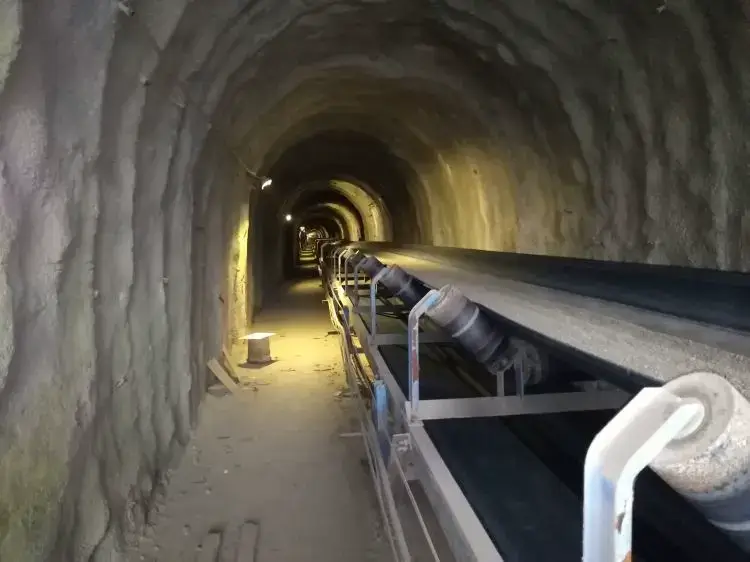
Conventional belt conveyors are only suitable for conveying scenarios with an inclination ≤12°. When faced with large-inclination (15°–45°) conveying demands such as slope lifting in mines, climbing conveying in grain storage, inclined loading and unloading at ports and terminals, and charging to smelting furnaces, or materials with low friction coefficients, easy rolling, and easy slippage such as coal, fine powder, wet sand, and granular materials, ordinary flat belts lack sufficient friction and are highly prone to material sliding, rolling back, and spillage. This not only causes material loss and pollutes the working environment but also drastically reduces conveying efficiency, even leading to failures such as material accumulation blocking equipment and damage to the conveyor belt. As a result, enterprises are forced to reduce the conveying inclination, increase equipment length and floor space, and significantly raise infrastructure and operating costs.
Meanwhile, in outdoor working conditions with heavy rain and high humidity, or scenarios where materials themselves have high moisture content (such as washed coal, wet ore, and fresh agricultural products), the friction between the belt surface and materials is further reduced, making slippage even more prominent. Conventional equipment can barely operate stably and continuously, becoming a core bottleneck restricting efficient conveying in special scenarios.
In core production links of metallurgy, building materials, chemical, power, and other industries, material temperatures often reach 100℃–300℃, and in some smelting and roasting scenarios, temperatures can approach 400℃. Under continuous high-temperature environments, conventional rubber conveyor belts rapidly suffer from softening, deformation, cracking, aging, and delamination. This not only shortens their service life to 1/3–1/2 of that in normal working conditions but also triggers serious safety accidents such as conveyor belt deviation, tearing, and breakage.
In addition, high-temperature environments affect the performance of core conveyor components: drum rubber lining is prone to melting and falling off, idler bearing grease fails, thermal expansion and contraction of metal structural parts cause frame deformation, and electrical components age rapidly with frequent failures. This leads to a sharp increase in equipment maintenance frequency, extended downtime, direct disruption to enterprises’ continuous production plans, and higher maintenance costs and safety risks.
In addition to the two core properties of anti-slip and heat resistance, belt conveyors for special industries have multiple comprehensive requirements:
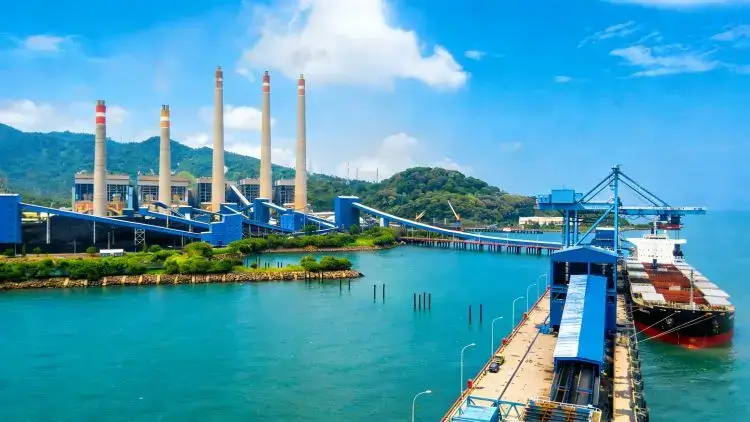
ZOOMRY anti-slip & heat resistant belt conveyor is designed and developed in accordance with ISO international standards, EU standards, as well as Chinese GB/T 10595-2017 and GB50431-2020 codes. Integrating years of industry practical experience, it achieves technological innovations across five core modules: conveyor belt, drive system, idlers and pulleys, frame structure, and control system. It comprehensively solves anti-slip and heat resistance challenges under special working conditions, while balancing equipment stability, safety, and service life.
Surface anti-slip pattern design: Abandoning the conventional flat belt structure, a variety of patented anti-slip patterns such as herringbone (V-shape), diamond, corrugated, and ribbed designs are adopted, with the herringbone pattern being the mainstream choice in the industry. The opening direction of the pattern is consistent with the material running direction, which not only forms mechanical engagement between the raised pattern and materials to greatly increase the static friction coefficient (≥0.6, compared to only 0.3–0.4 for conventional flat belts) but also ensures smooth material discharge without residual accumulation. It enables stable conveying at large inclinations of 15°–45°, increasing the conveying angle by 2–3 times compared to conventional equipment. For ultra-fine powder and wet sticky materials, deep-pattern and high-damping pattern structures can be customized to further enhance grip and completely eliminate material slippage.
High heat-resistant anti-slip material: The conveyor belt cover rubber adopts special heat-resistant materials such as EPDM rubber, nitrile rubber, and fluororubber, paired with steel cord or high-strength polyester canvas carcass layers to form a three-layer composite structure:
Special process treatment: Adopting high-temperature vulcanization integrated molding to ensure firm bonding between patterns and the belt body without delamination or cracking; thickened belt edges to enhance tear and wear resistance; surface anti-slip, anti-adhesion, and anti-static treatment, adapting to special scenarios such as flammable, explosive, and high-dust environments.
Heat-resistant drive pulley: The drive pulley adopts a thickened cast steel/steel plate welded structure, with surface treatment of diamond rubber patterns, herringbone rubber patterns, or ceramic rubber lining. The rubber lining material is high-temperature-resistant rubber (withstanding 150℃–200℃) or ceramic particles, increasing the friction coefficient by more than 50% compared to ordinary smooth pulleys. This not only enhances friction with the conveyor belt to prevent drive slippage but also maintains rubber lining strength at high temperatures without melting, falling off, or cracking. The pulley is internally designed for heat dissipation, paired with imported high-temperature-resistant bearings (SKF/NSK) and high-temperature grease, ensuring smooth bearing operation without jamming or abnormal temperature rise in environments ranging from -30℃ to 250℃.
High-efficiency heat-resistant drive unit: The drive motor adopts a variable-frequency explosion-proof motor or high-temperature-resistant motor with protection class IP55/IP65 and insulation class F/H, capable of continuous operation at ambient temperatures ≤80℃. The reducer adopts a hard-tooth surface planetary reducer or gear reducer with a thickened heat-dissipating box, filled with high-temperature-resistant gear oil internally, achieving transmission efficiency ≥95%, low noise, low vibration, and long service life. Paired with a hydraulic coupling or variable-frequency soft starter, it realizes smooth starting and speed regulation, reduces conveyor belt impact, avoids slippage during startup, and adapts to working conditions with large load fluctuations.
Intelligent tensioning system: Adopting hydraulic automatic tensioning, gravity tensioning, or screw tensioning systems, which automatically adjust tension according to the conveyor belt’s operating status to ensure optimal friction between the conveyor belt and drive pulley, eliminating slippage caused by insufficient tension. All tensioning components are made of heat-resistant and anti-corrosive materials, free from deformation and rust in high-temperature environments, with stable and reliable tension that requires no frequent manual adjustment.
Heat-resistant idlers: The idler shell is made of seamless steel pipe, ceramic composite pipe, or high-molecular heat-resistant material, with a smooth, wear-resistant, and non-stick surface. The bearing seat is made of cast steel with an internal double-seal structure (labyrinth seal + fluororubber sealing ring), effectively blocking dust, high-temperature gas, and moisture ingress. Bearings are imported high-temperature-resistant deep groove ball bearings filled with high-temperature grease, featuring low running resistance (friction coefficient ≤0.02), flexible rotation, and no jamming, capable of continuous operation at 150℃ for over 5000 hours without failure. The idler spacing is optimized according to conveying inclination and material weight, with dense arrangement at large-inclination sections to ensure uniform support of the conveyor belt without sagging or deviation.
Bend pulleys and impact pulleys: Bend pulleys share the same structural design as drive pulleys, with smooth or patterned surface treatment to meet different guiding needs. Impact pulleys/impact idler sets are installed at feeding points, adopting an elastic rubber buffer structure to absorb impacts from large and high-temperature materials, protect the conveyor belt and idlers, and prevent tearing or deformation caused by excessive local stress on the conveyor belt.
The frame is welded from Q235B/Q355B high-strength carbon steel, with the overall structure optimized via finite element analysis, featuring high rigidity and stability to withstand heavy loads, high temperatures, vibrations, and other complex working conditions. The frame surface undergoes three-layer treatment: sandblasting and rust removal + high-temperature-resistant anti-corrosive primer + high-temperature-resistant topcoat, withstanding 150℃–200℃, resisting rust, corrosion, and aging, and remaining rust-free for 10 years in outdoor use.
For special scenarios such as high temperature, dust, and high humidity, fully enclosed dust covers, heat insulation shields, rain sheds, and other structures are optional to reduce the impact of high-temperature radiation, dust pollution, and rain erosion on equipment. Material anti-fall baffles and protective nets are installed at large-inclination conveying sections to prevent accidental material slippage and ensure operational safety. Adjustable legs are installed at the bottom of the frame to adapt to different site flatness, enabling convenient installation and flexible adjustment.
Equipped with a PLC programmable control system and touch-screen operation interface, it realizes automatic control, status monitoring, fault alarm, and remote management of the conveyor. The system has the following core functions:
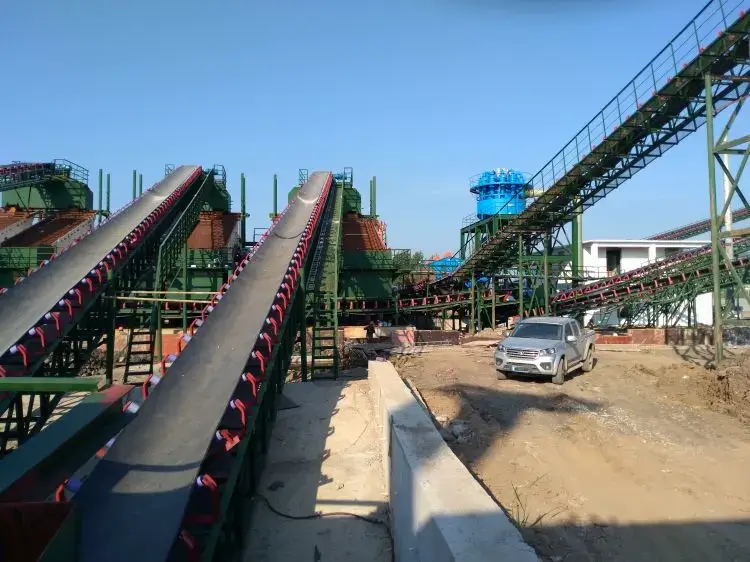
ZOOMRY anti-slip & heat resistant belt conveyor covers a full range of specifications and can be customized according to customer requirements. The core parameters and performance indicators are as follows (compliant with international and domestic standards such as ISO 5048, ISO 283, and GB/T 10595):
| Parameter Category | Core Index | Optional Range | Remarks |
|---|---|---|---|
| Conveyor Belt Width | 500mm–2400mm | 500/650/800/1000/1200/1400/1600/1800/2000/2200/2400mm | Non-standard widths customizable |
| Belt Speed | 0.8m/s–4.0m/s | 0.8/1.0/1.25/1.6/2.0/2.5/3.15/4.0m/s | Variable-frequency adjustable, low speed adapted for large-inclination conditions |
| Conveying Inclination | 0°–45° | Horizontal / Inclined / Large Inclination | Conventional anti-slip type 15°–30°, deep-pattern type 30°–45° |
| Conveying Capacity | 100t/h–5000t/h | Customized according to belt width, speed, and inclination | High capacity adapted for mining, power, and building materials industries |
| Heat Resistance Temperature | Long-term 120℃–200℃, short-term 250℃–300℃ | 120℃/150℃/180℃/200℃ | Ultra-high temperature type customizable (≤350℃) |
| Friction Coefficient | Static friction coefficient ≥0.6, dynamic friction coefficient ≥0.5 | 0.3–0.4 for conventional flat belts | Anti-slip pattern design increases by over 50% |
| Conveyor Belt Service Life | 3–8 years | Heat-resistant type 3–5 years, conventional type 5–8 years | Extended by 1–2 times compared to conventional belts under high-temperature conditions |
| Motor Power | 4kW–400kW | Customized according to conveying length, inclination, and capacity | Variable-frequency explosion-proof / high-temperature-resistant motors |
| Protection Class | IP55/IP65 | Motors, electric control boxes, bearing seats | Adapted for dusty, high-humidity, and outdoor conditions |
In scenarios such as iron and steel, non-ferrous metal smelting, sintering, and pelletizing, conveying high-temperature sintered ore, coke, hot steel slag, hematite, bauxite, and other materials (temperature 100℃–300℃), equipment must simultaneously meet high-temperature resistance, large inclination, heavy load, and continuous operation requirements. ZOOMRY conveyors stably realize continuous conveying in furnace charging, finished product transfer, waste residue treatment, and other links. Anti-slip patterns prevent high-temperature material slippage, and heat-resistant conveyor belts and components ensure long-term reliable operation at high temperatures, adapting to 24-hour uninterrupted production.
In the production of cement, glass, ceramics, and refractory materials, conveying clinker, limestone, dolomite, gypsum, high-temperature aggregate, and other materials (temperature 80℃–250℃), often accompanied by large-inclination, high-dust, and high-wear working conditions. The equipment adapts to scenarios such as cement kiln tail charging, clinker cooling conveying, and large-inclination transfer in raw material yards. Anti-slip performance solves the problem of fine powder and granular material slippage, heat-resistant structure withstands high-temperature clinker impact, and wear-resistant components adapt to high-wear conditions, reducing maintenance costs.
In underground mining, open-pit stripping, washing and processing, storage and transfer links of coal mines, metal mines, and non-metal mines, conveying raw coal, clean coal, ore, tailings, sand and gravel, and other materials, facing complex working conditions such as large inclination, high humidity, high dust, flammability, and explosiveness. Anti-slip conveyors realize 30°–45° large-inclination climbing conveying, saving mine infrastructure space; heat-resistant types adapt to underground high temperature and outdoor sun exposure; flame-retardant and anti-static structures comply with mine safety standards; anti-slip, anti-deviation, and anti-tear functions ensure underground operation safety.
In coal conveying, slag conveying, and limestone conveying links of thermal power plants, coal temperature often reaches 80℃–120℃ and slag temperature 150℃–250℃, requiring continuous high-capacity conveying. The equipment adapts to scenarios such as coal conveying trestles, slag bin transfer, and desulfurization system material conveying. Heat resistance copes with high-temperature materials, anti-slip structure solves the problem of wet coal and fine powder slippage, and the intelligent control system realizes linkage with the power plant DCS system, ensuring continuous and stable power generation production.
In the chemical industry, conveying high-temperature chemical raw materials, granular fertilizers, coke, and other materials; in the grain industry, conveying grain, miscellaneous grains, oilseeds, and other slippery materials, often requiring large-inclination storage conveying and high-temperature drying link conveying. Anti-slip conveyors adapt to grain silo climbing charging (inclination 15°–25°) and high-temperature transfer of chemical raw materials. Food-grade heat-resistant materials meet the hygiene requirements of the grain and food industries, and acid-base resistant structures adapt to corrosive chemical working conditions, ensuring no material leakage, no deterioration, and efficient conveying.
Loading, unloading, and transfer of ore, coal, grain, and building materials at port terminals and bulk cargo yards, facing outdoor high-humidity, rainy, large-inclination, and high-capacity working conditions. Anti-slip conveyors realize inclined ship loading at terminals and climbing transfer in yards. Anti-slip patterns maintain stable conveying in wet and slippery environments, weather-resistant structures adapt to long-term outdoor use, and can be matched with telescopic stackers, mobile ship loaders, and other equipment to form a complete bulk material conveying system, improving port loading and unloading efficiency.
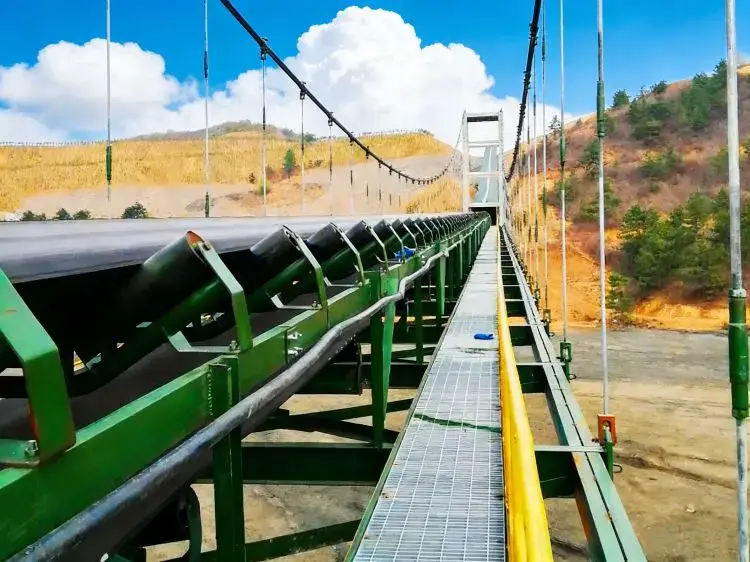
Based in China and serving the world, ZOOMRY has established a global marketing and service network covering Asia, Europe, Africa, America, and Oceania, providing full-life-cycle services to domestic and international customers:
In the field of bulk material conveying for global special industries, anti-slip and heat resistance have become core criteria for measuring equipment quality. With in-depth industry technological accumulation, meticulous product quality, and a global service system, ZOOMRY anti-slip & heat resistant belt conveyor precisely solves material conveying pain points under special working conditions, providing stable, efficient, safe, and reliable conveying solutions for metallurgy, building materials, mining, power, chemical, grain, port, and other industries.
In the future, ZOOMRY will continue to focus on technological innovation for special industries, continuously optimizing core performances such as anti-slip, heat resistance, intelligence, and energy saving. With more advanced technologies, higher-quality products, and more comprehensive services, we will help global customers improve production efficiency, reduce operating costs, ensure production safety, and become a trusted partner in the global bulk material conveying equipment field.


Enter your email to contact us quickly!
Copyright © 2002-2026 Zoomry Group Company Limited