Time:2026-03-30 16:37:44 Number of Clicks:
A belt conveyor, also known as a belt conveying machine or belt feeder, operates on the core logic of using a conveyor belt as both the material-carrying and traction component. It relies on the friction between the drive pulley and the conveyor belt to drive the endless belt loop in continuous operation, realizing consistent and stable material transfer from the feed end to the discharge end. Unlike intermittent handling equipment such as forklifts, dump trucks and loaders, belt conveyors enable 24/7 uninterrupted operation, with core advantages of high throughput, long conveying distance and low wear and tear, making them an irreplaceable core equipment in the bulk material handling industry.
In accordance with international CEMA standards and global industry application scenarios, belt conveyors are classified into multiple types based on structure, application and working conditions, covering the full product line of ZOOMRY. Among them, the trough belt conveyor is the most universal basic model, where idler sets form the conveyor belt into a trough shape, effectively increasing load capacity and preventing material spillage, suitable for conventional conveying scenarios with horizontal or small inclination angles. The pipe belt conveyor is a special fully enclosed model, which rolls the conveyor belt into a hexagonal tubular shape through six sets of idlers to achieve fully enclosed conveying, with a maximum turning angle of 110°, far exceeding the 70° turning limit of conventional models. It is ideal for scenarios with strict environmental requirements, such as conveying through residential areas, roads and tunnels. The long-distance overland belt conveyor is specially designed for complex terrains such as mountainous and cross-sea applications, with a single-unit conveying distance of up to several kilometers, and is a core competitive product of ZOOMRY. Mobile models such as radial telescopic stackers, ship loaders, hopper feeders and truck unloaders, relying on their mobile, slewing and telescopic features, are suitable for flexible operation scenarios without fixed foundations such as ports, mines and stockyards.
In the global industrial production system, the core value of belt conveyors is reflected in four dimensions: efficiency, cost, environmental protection and adaptability. In terms of efficiency, a single system can achieve an hourly throughput of thousands of tons, with continuous operation efficiency far exceeding traditional transfer equipment. In terms of cost, the equipment has lower operation, maintenance and energy consumption costs, with a comprehensive cost reduction of more than 30% compared with dump truck transfer. In terms of environmental protection, enclosed conveying reduces dust and noise emissions, lowers carbon footprint, and aligns with global green production trends. In terms of adaptability, customized design can be adopted to fit various extreme working conditions such as high temperature, corrosion, severe cold, soft soil foundations and steep slopes, meeting the personalized needs of different industries.
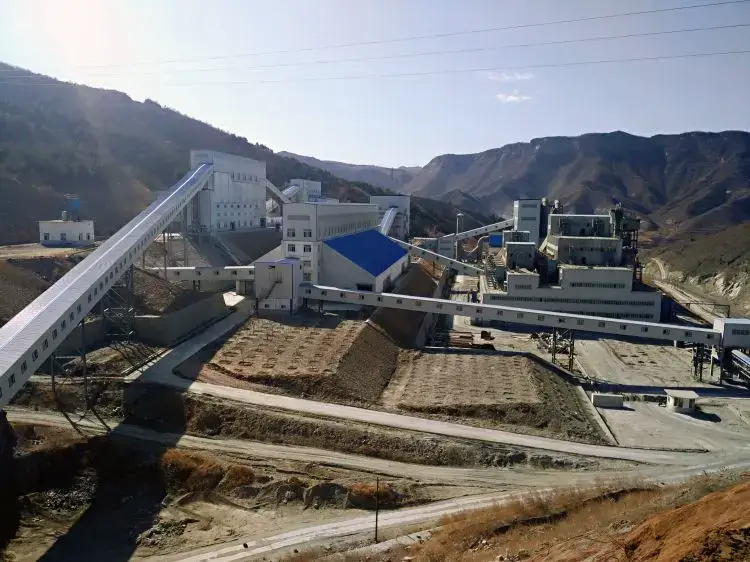
The core operation of belt conveyors relies on two fundamental logics: friction drive + endless loop carrying. Different models extend exclusive designs based on the basic principle to adapt to special operation requirements.
The complete operation process of a general-purpose belt conveyor is clear and intuitive. First, the electric motor provides the original power, which is converted into low speed and high torque through the reducer and coupling, and transmitted to the drive pulley. The surface of the drive pulley generates static friction with the conveyor belt, overcoming the running resistance of the conveyor belt, materials and idlers, and driving the conveyor belt to run at a constant speed. The conveyor belt forms a closed loop around the drive pulley, bend pulleys and take-up pulley, realizing uninterrupted cyclic operation. Materials fall evenly onto the conveyor belt from the feed hopper, move synchronously with the conveyor belt to the discharge end to complete unloading, and the unloaded conveyor belt returns to the feed end supported by return idlers, completing a full working cycle. In simple terms, the operation of a belt conveyor is the process of power driving the pulley, friction driving the belt, belt carrying the materials, and continuous directional conveying.
The pipe belt conveyor has an enclosed upgrade based on the general principle. At the feed section, the conveyor belt is gradually rolled into a hexagonal tubular shape by six sets of idlers, and the materials are completely enclosed inside the pipe, fundamentally eliminating material spillage, dust and rainwater infiltration. At the same time, it greatly improves the turning capacity, can bypass buildings, mountains and other obstacles without transfer, effectively reducing civil construction costs. The return section also maintains the tubular shape, meeting the environmental protection conveying requirements throughout the whole process.
Mobile models such as ZOOMRY ZR-SF Series radial telescopic stackers and ship loaders integrate the composite principle of mechanical, hydraulic and electronic control. The equipment uses a hydraulic power unit to control the lifting, slewing, telescoping and luffing of the machine body, adapting to different stacking heights, widths and vessel types. The telescopic conveying structure is driven by a hydraulic winch and steel wire rope, with stable stroke and automatic locking function in case of power failure or rope breakage, which can complete locking within 0.01 seconds to ensure safety. At the same time, it is equipped with a PLC + HMI touch screen and remote control system, supporting fully automatic stacking operation, reducing manual intervention while minimizing material segregation, pollution and compaction. The tire or crawler chassis enables free site transfer without fixed foundations, adapting to various off-grid and complex sites such as ports, mines and remote mining areas.
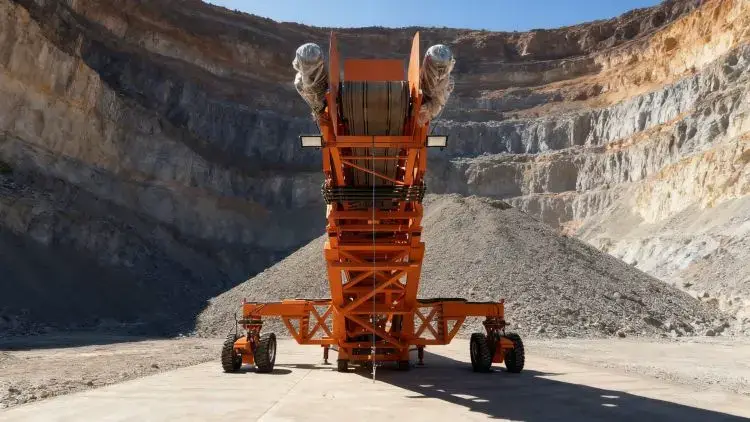
The operation stability, service life and working efficiency of a belt conveyor are completely determined by the quality of its core components. Below is an in-depth analysis of the core components in combination with international CEMA standards, ISO standards and ZOOMRY's self-developed technical indicators, all parameters comply with the general specifications for global industrial equipment.
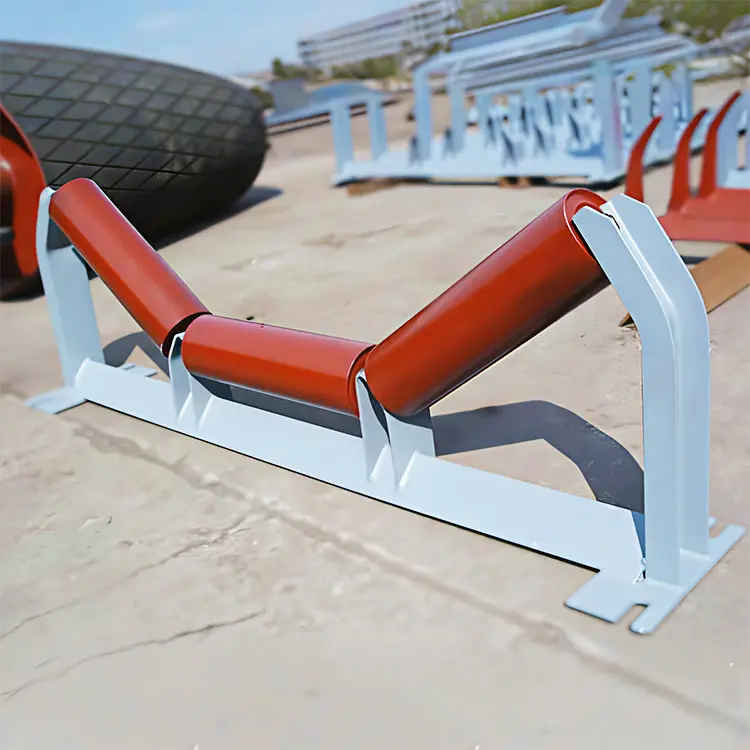
Idlers and idler sets are the carrying core of the belt conveyor, accounting for more than 70% of the total components of the equipment. Their main function is to support the conveyor belt on the carrying side and return side, prevent belt sagging and misalignment, and impact idlers can also withstand the impact force of falling materials. ZOOMRY's self-developed idlers have performance far exceeding national standards and the industry average. For idlers with a length of less than 550mm, the radial runout is ≤0.4mm, the axial displacement is ≤0.4mm under 500N axial pressure, the no-load running noise is controlled at 40-45dB, the water intake is ≤100g after 72 hours of immersion in water, the rotational resistance is ≤2N, and the service life can reach more than 50,000 hours. They can adapt to complex working conditions such as long-distance, heavy-load, seaside and underground applications, covering a full range of idler sets including trough carrying, transition, impact, return and self-aligning types.
Pulleys are the core components for power transmission and conveyor belt guiding, divided into three categories: drive pulleys, bend pulleys and take-up pulleys. The drive pulley is responsible for power transmission, and rubber lagging on the surface can increase friction and prevent slippage. Bend pulleys are used to change the running direction of the conveyor belt to adapt to the overall layout of the equipment. The take-up pulley works in conjunction with the take-up device to ensure that the conveyor belt always maintains a constant tension. ZOOMRY pulleys are made of high-quality materials: 40Cr rolled steel is used for shafts with a diameter ≤190mm, and 40Cr forgings are used for shafts with a diameter ≥200mm. The cylinder body is processed by CNC four-roller rolling, with an ovality of less than 1.5mm. After welding, it undergoes ultrasonic flaw detection and tempering stress relief treatment, with no cracks and no stress concentration. The service life can also reach more than 50,000 hours, matching the same service life of idlers, reducing the frequency of equipment shutdown and replacement.
The conveyor belt is the core carrying and traction component of the equipment, with the dual function of carrying materials and transmitting power. The materials include rubber, nylon, polyester, steel cord, etc., which can be adapted to the requirements of abrasion resistance, high temperature resistance, oil resistance, flame retardancy and other properties according to material characteristics. The special conveyor belt for pipe belt conveyors has foldable properties, with no rebound or material leakage after forming. ZOOMRY can provide full-specification customized conveyor belt selection services according to customer working conditions.
The drive system is the power heart of the belt conveyor, consisting of an electric motor, reducer and coupling. Mobile models are also equipped with a hydraulic power unit and on-board diesel generator set, which can operate independently without external power supply, adapting to scenarios such as remote mining areas and wharves. The equipment can be equipped with international brand gear motors such as SEW, FLENDER and Jiepai, meeting the power requirements of high-power, heavy-load conveying.
The core function of the take-up device is to ensure constant tension of the conveyor belt during operation, avoiding problems such as slippage, misalignment and sagging. Common types include screw take-up, hydraulic take-up and gravity take-up. Long-distance conveying systems prefer automatic hydraulic take-up, which has stable tension and fast response speed. Safety protection devices are essential configurations for the compliant operation of the equipment. All ZOOMRY series products are equipped with belt misalignment switches, pull cord switches, overload protection, fall protection, temperature and smoke monitoring devices as standard, complying with international safety standards such as CE, EAC and CEMA, to comprehensively guarantee the safety of personnel and equipment.
The cleaning system is used to prevent material from adhering to the belt and pulleys, extending the service life of components and reducing maintenance workload. The equipment is equipped with head and tail polyurethane scrapers as standard, and brush scrapers are optional, with a cleaning rate of up to 99%, no material residue and no damage to the belt. The frame and chassis are designed according to the model type: fixed models adopt a lattice steel structure, with high strength and light weight, reducing civil construction costs; mobile models adopt a crawler or tire chassis with hydraulic lifting design, adapting to special sites such as soft soil foundations, steep slopes and narrow wharves. All frames are made of high-quality carbon steel, with reinforced treatment at key stress points, meeting international standards such as CEMA, GB, AS and CE.
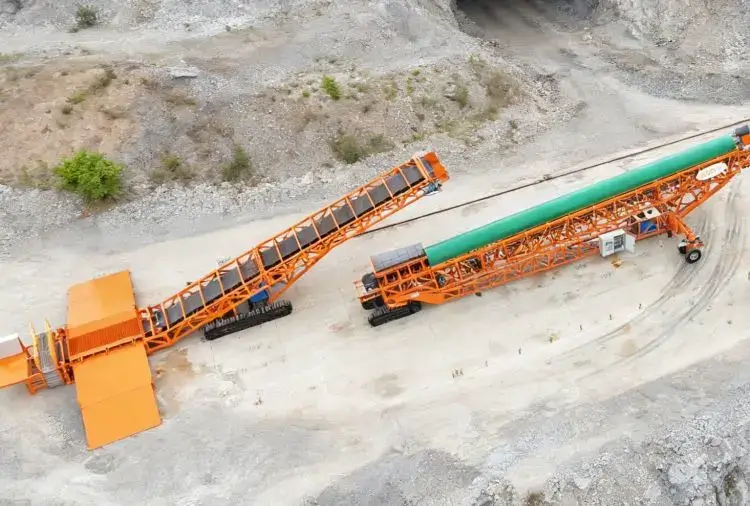
In addition to general-purpose trough belt conveyors, ZOOMRY has developed a variety of customized belt conveying equipment for the special needs of different industries around the world, covering all kinds of complex working conditions.
With the advantages of fully enclosed conveying, large turning capacity and small footprint, the pipe belt conveyor perfectly solves the project pain points of high environmental protection requirements, complex terrain and long-distance conveying, and is the preferred equipment for chemical industry, areas near residential areas, and conveying scenarios crossing roads and tunnels. The radial telescopic stacker has three core functions: slewing, telescoping and luffing. Its stacking capacity is 28% higher than that of conventional fixed conveyors, with a belt width ranging from 800mm to 1600mm, an hourly throughput of 500-3000m³/h, and a maximum stacking height of up to 20 meters. It is widely used in ports, mines, aggregate plants, and cement raw material yards.
Mobile ship loaders are compatible with a full range of vessel types including barges, handysize and Panamax vessels, with flexible mobility to adapt to wharves with limited space, and are the core equipment for efficient ship loading in bulk cargo terminals. Heavy-duty hopper feeders are specially designed for heavy-load materials such as iron ore, concentrate and aggregate, with a hopper capacity of 8.8m³ and a maximum hourly processing capacity of 3500TPH. They can withstand the high-intensity impact of loader unloading, and the crawler or wheeled chassis supports flexible site transfer, adapting to space-constrained scenarios such as ports and indoor stockyards. Truck unloaders are available in wheeled and crawler options, with customizable 2-lane or 4-lane designs, and an hourly throughput of 200-1800TPH. They are specially designed for rapid truck unloading in quarries, ports and mining areas, greatly improving unloading efficiency.
ZOOMRY provides full-process EPC+M+O integrated services, covering the entire life cycle including scheme design, equipment manufacturing, installation and commissioning, operation and maintenance management, and equipment upgrading and transformation. We have multiple engineering teams with rich experience in design and on-site construction, especially specializing in high-difficulty long-distance conveying projects with complex terrain, large inclination angles, sea-crossing and tunnel-crossing requirements, and are a core supplier of long-distance overland conveying systems in China.
In terms of quality control, the enterprise has built a self-owned professional testing center, including a chemical laboratory, hardness laboratory, idler laboratory, and mechanical property laboratory, equipped with more than 60 sets of professional testing equipment. All products have passed ISO9001 Quality Management System certification and ISO14001 Environmental Management System certification, and have obtained international certifications such as CEMA, CE, EAC and KCS, meeting the market standards of different regions around the world including Europe, America, Russia and South Korea.
Self-research and self-supply of core components is the unique advantage of ZOOMRY. Key components such as idlers and pulleys are all independently developed and produced, with controllable quality, lower cost and shorter delivery cycle, completely avoiding the quality and supply shortcomings of purchased components. The equipment adopts modular and customized design, and mobile models can be packed into 40ft HQ containers for convenient and efficient global transportation. On-site assembly only takes 10-20 days, greatly shortening the project implementation cycle.
In terms of intelligence and safety, all ZOOMRY series products support PLC automatic control, HMI touch screen operation and remote control, and the three-layer safety protection design reaches the level of international first-tier brands, balancing operation efficiency and operation safety.
The selection of a belt conveyor needs to be comprehensively considered in combination with material characteristics, process parameters, working conditions and international standards. First, it is necessary to clarify the particle size, density, moisture content, corrosivity and angle of repose of the material, then determine the core process parameters such as hourly throughput, conveying distance, inclination angle and turning radius, and at the same time combine the working conditions such as on-site temperature, altitude, site size and environmental protection requirements, and finally select the model and configuration that meet international standards such as CEMA, GB, AS and CE.
Equipment operation and maintenance is the key to ensuring long-term stable operation. In daily work, it is necessary to regularly check the operation status of idlers and pulleys, and replace damaged components in a timely manner; maintain proper tension of the conveyor belt to avoid slippage and misalignment problems; ensure the normal operation of the cleaning system to reduce component wear caused by material adhesion; for mobile models, regular maintenance of the hydraulic system, chassis and engine is required to ensure the flexibility of equipment site transfer and operation.
With more than 20 years of deep engagement in the belt conveyor field, ZOOMRY takes international standards as the R&D benchmark, self-developed technology as the core support, and full life cycle services as the guarantee. We provide stable and reliable bulk material conveying solutions for global industries including mining, ports, cement, coal, metallurgy and more, making us a representative brand of Made in China going global. In the future, ZOOMRY will continue to focus on technological innovation, continuously optimize product performance and service system, create greater value for global customers, and promote the sustainable development of the bulk material conveying industry towards intelligence, greenization and high efficiency.


Enter your email to contact us quickly!
Copyright © 2002-2026 Zoomry Group Company Limited